Handheld Inspection Cameras in Data Centers
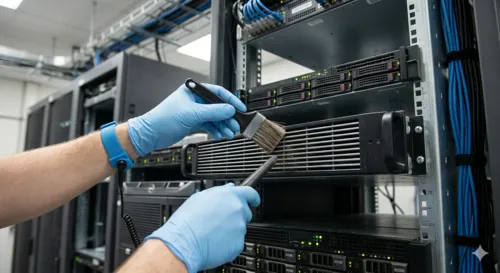
Dust and contamination inside a data center do not accumulate only in visible areas. Some of the most critical contamination builds up precisely where no one looks underneath IT equipment racks, inside cable tray baskets, along fiber runners, behind dense UTP cable bundles, and on high structural steel beams and pipes near the ceiling.
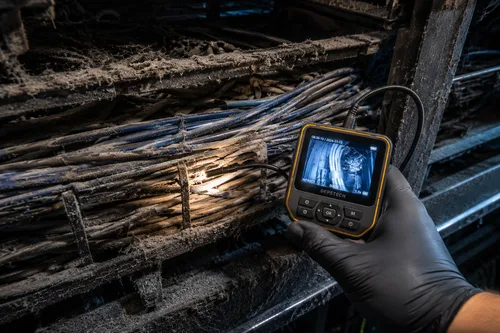
Handheld Inspection Cameras in Data Centers: Reaching Where Eyes and Hands Cannot
By Ashraf Almuhtaseb | Data Center Technical Cleaning Expert | idata.center
The Hidden Contamination Problem
Dust and contamination inside a data center do not accumulate only in visible areas. Some of the most critical contamination builds up precisely where no one looks underneath IT equipment racks, inside cable tray baskets, along fiber runners, behind dense UTP cable bundles, and on high structural steel beams and pipes near the ceiling.
In many modern data centers, ceiling heights reach 12 meters and above. These upper zones are inaccessible by standard scissor lifts, A-frame safety ladders, or conventional climbing methods. Yet contamination accumulates there just as it does at floor level and it falls. Dislodged dust from high structural elements and cable trays rains down onto equipment below, entering server intakes and recontaminating areas that were just cleaned.
Without a way to inspect these zones, contamination remains invisible, unquantified, and unaddressed.
The Solution: Handheld Inspection Camera With Flexible Gooseneck Probe
A professional handheld inspection camera fitted with a high-resolution lens and a flexible gooseneck probe cable of sufficient length solves this problem directly. It allows the cleaning specialist or facility engineer to visually inspect areas that cannot be reached physically, documenting contamination levels before and after cleaning and identifying zones that require targeted intervention.
Key inspection areas where this tool delivers immediate value include:
Underneath IT equipment racks — where dust accumulates on cable management, rack bases, and raised floor surfaces that are impossible to see without moving equipment
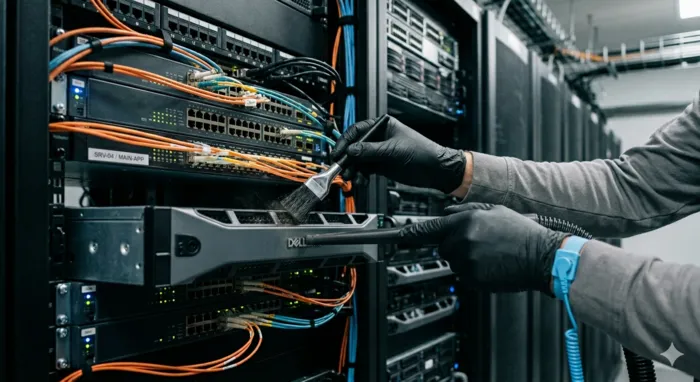
Inside cable tray baskets and UTP trays — where years of fibrous dust, cable jacket debris, and particulate build up between tightly packed cables and on supporting iron holders
Fiber runners and cable management channels — narrow enclosed pathways where contamination is completely hidden from standard visual inspection
High structural steel beams and ceiling pipes — at heights of 8 to 12 meters or more, where surface dust accumulation goes entirely unnoticed in routine inspections
For maximum reach at height, combine the inspection camera's gooseneck probe with a telescoping extension pole. This combination allows a single operator standing safely at floor level to extend the camera to ceiling zones, rotating and angling the probe to capture full 360-degree visual coverage of structural elements without any climbing required.
Working at Height: Safety Is Non-Negotiable
When inspection at height requires the use of a scissor lift or A-frame safety ladder, strict safety protocols must apply without exception.
Always wear a full body safety harness and fall protection belt when standing on a scissor lift platform or elevated A-frame ladder. Falls from height inside a data center are a serious risk, and the enclosed environment limits emergency response options.
A second person must always be present. No height inspection should be carried out by a single individual working alone. The assistant's role is to stabilize equipment, manage cables and tools, monitor the operator's position, and respond immediately if any incident occurs. This is not optional, it is a basic requirement for safe working at height in any critical environment.
Documentation: The Hidden Value of Inspection Cameras
Beyond contamination detection, the inspection camera provides something equally important: visual evidence. Still images and video footage captured during inspection create a before-and-after record that supports cleaning program reporting, client documentation, and internal audit trails. For facility managers reporting to stakeholders or demonstrating compliance with contamination control standards, this documentation has direct professional value.
Conclusion
Contamination does not respect the limits of human reach. In data center environments where ceiling heights, dense cable infrastructure, and equipment placement create zones that cannot be physically accessed, a handheld inspection camera with a flexible gooseneck probe and telescoping extension pole is not a luxury it is a necessary inspection tool.
See what cannot be seen. Document what cannot be reached. Clean what would otherwise remain hidden.
Work Smartly, Work Safely
About the Author
Ashraf Almuhtaseb is a Data Center Technical Cleaning Expert with over 9 years of specialized experience since 2017. He is the only independent professional in the MENA region — and one of very few globally — publishing dedicated, in-depth technical knowledge on data center cleaning standards, contamination control, and ISO 14644 compliance. Visit idata.center for more articles, guides, and resources.
© Ashraf Almuhtaseb | idata.center | All rights reserved
© 2026 Ashraf Almuhtaseb | wurriors.com | All rights reserved